Who will fund the infrastructure of the energy transition?
The current financing ecosystem remains poorly matched to the challenge of the modern energy system. Traditional venture capital often struggles with long development timelines and infrastructure-scale deployment needs. Public funding is fragmented and episodic. Institutional investors frequently enter too late. Meanwhile, geopolitical competition, load growth from AI and electrification, and rising pressure for domestic industrial capacity are increasing the urgency of getting these financing models right.
What kinds of capital structures are actually fit for purpose? Where can public institutions reduce risk without crowding out private markets? Which technologies are commercially viable — and which remain dependent on policy support? And what lessons can investors, development finance practitioners, and climate-focused policymakers learn from one another?
Join Impact for Breakfast DC for a discussion on the challenge of financing hard tech in the energy transition era. The conversation will explore the intersection of public finance, venture capital, infrastructure investment, and industrial policy — and what it will take to move from promising pilots to scaled deployment.
Speakers
Tim Profeta, Senior Fellow, Nicholas Institute for Energy, Environment & Sustainability at Duke University
Paul Elizondo, energy finance and policy expert, CEO of P2 Corporate Finance
Senofer Mendoza, Founder and Managing Partner, Mendoza Ventures
Rokas Beresniovas, Head of Partnerships & Business Development, Montgomery County Green Bank
Moderator
Jackson Ewing, Director of Energy and Climate Policy, Nicholas Institute for Energy, Environment & Sustainability at Duke University
The event will be of interest to investors, policymakers, entrepreneurs, philanthropies, development practitioners, and anyone focused on the future of energy, infrastructure, and industrial strategy.
Light breakfast will be served. Please bring ID. Even begins at 8 am
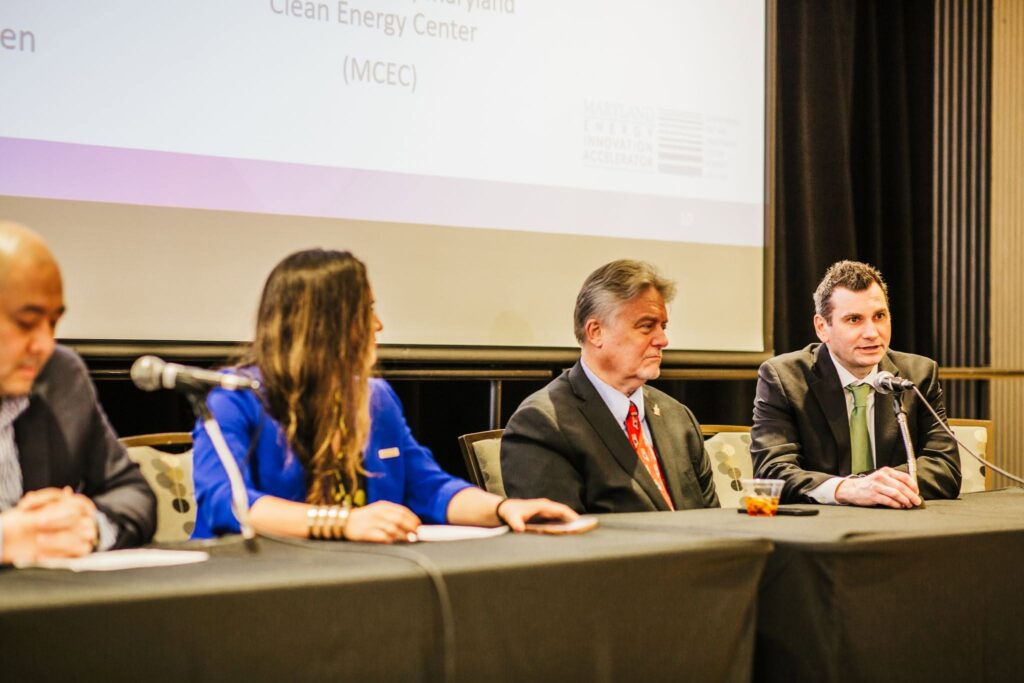
During DC Climate Week, Rokas Beresniovas of Montgomery County Green Bank joined leaders from across Maryland’s climate and clean energy ecosystem to discuss how innovative companies can access the capital needed to scale.
The Maryland Climate Tech Capital Stack event brought together experts from financing, commercialization, research, and startup support organizations to explore the funding pathways available to climate technology companies—from early-stage research and seed funding to commercialization and debt financing.
The discussion highlighted the importance of aligning capital, innovation, and public-private partnerships to accelerate deployment of climate solutions and strengthen Maryland’s growing clean energy economy.
Read more about Maryland Day at DC Climate Week and the Climate Tech Capital Stack event here.
Light Reception with the Montgomery County Planning Board: 5:00 p.m. to 5:45 p.m.
Panel:
Rokas Beresniovas, Head of Partnerships & Business Development – Montgomery County Green Bank
Heather Jauregui, Director of Sustainability – Perkins Eastman
Daniel McGee, Director of Sustainability & Senior Development Associate – Redbrick LMD
Details:
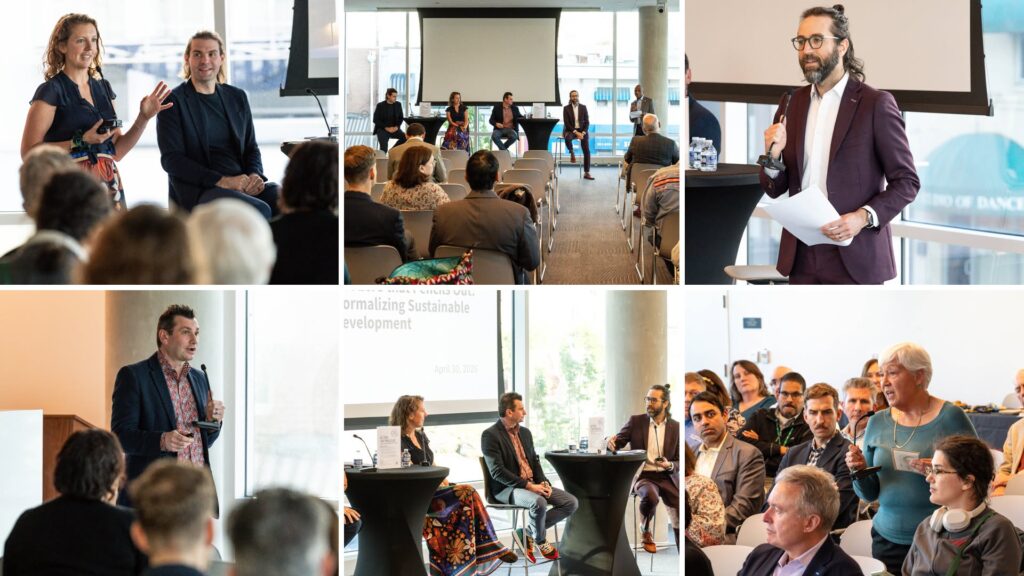
Can sustainable development be delivered without higher construction costs compared to traditional development? What does financially responsible, climate-ready development look like for future generations in Montgomery County? And how can public- and private-sector partners integrate sustainability into projects right now, using proven tools, financing, and design strategies?
Join the Montgomery County Planning Board for a dynamic panel discussion on how innovative design, smart financing, and integrated planning can make sustainable development achievable and cost effective.
Panelists will share real-world examples about delivering high-performance, low-carbon projects while demonstrating how sustainability goals can align with financial feasibility, market realities, and long-term value. The discussion will highlight the role of public-private collaboration, creative financing mechanisms, and thoughtful design in accelerating Montgomery County’s path toward net zero development.
This free event is open to the public. Continuing Education Credits are available.
Continuing Education Credits (CEUs) available
American Society of Landscape Architects (LA CES): 5.0
American Planning Association (APA): 2.0
American Institute of Certified Planners (AICP): 2.0
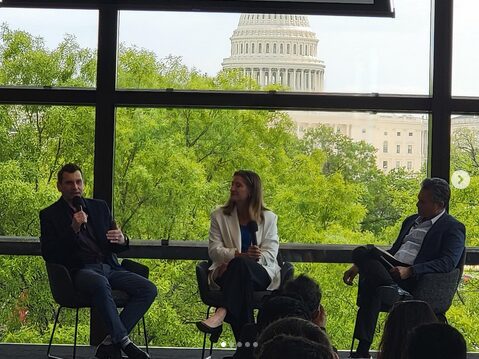
Kicking off DC Climate Week with an energizing discussion at Startup Bazaar, where Rokas Beresniovas joined climate-tech founders, investors, infrastructure funds, policymakers, and corporate leaders focused on scaling the next generation of climate solutions.
The conversation explored the opportunities and challenges facing climate innovation today—from grid modernization and energy storage to climate AI, industrial decarbonization, and carbon markets. A key theme throughout was the role of capital in moving promising technologies from concept to commercial scale.
If you’re attending DC Climate Week and interested in climate finance, clean energy deployment, infrastructure investment, public-private partnerships, or innovative funding models, connect with Rokas to continue the conversation.
The energy transition will require not only breakthrough technologies, but also the capital structures and partnerships needed to bring them to market.
For nearly a decade, Rokas Beresniovas has contributed columns to The American Bazaar, writing on business, finance, and sustainability. With over 20 years in finance—and now serving as Head of Partnerships at the Montgomery County Green Bank—he is set to publish his new book, “Green as a Lever: A Developer’s Playbook for Lower Equity, Cheaper Capital, and Stronger Returns,” on April 19, available for preorder on Amazon Kindle.
Ahead of the release, The American Bazaar sat down with him to understand what prompted him to write the book.
You have been writing for The American Bazaar for nearly a decade. How did a column become a book?
It was an accident, really. I have been contributing articles to The American Bazaar since 2016 — short pieces on finance, sustainability, banking, whatever was on my mind. One day I sat down to write another column about how capital structures were failing multifamily developers, and ten pages in I stopped and thought — this is not an article. This could be a book. That was the moment.
The funny thing is, I am not someone who naturally loves to write or even to read. I think I have undiagnosed ADHD, and sitting with long text has never come easy to me. But something about writing this material was different. It helped me focus. It helped me organize what I had been seeing in deals for years. And honestly, it helped with my stress and my mental health in ways I did not expect. I would finish a writing session and feel genuinely better. So the book kept growing — not because I set out to write one, but because the process itself was giving me something I needed.
You argue that real estate does not have a sustainability problem — it has a capital problem. What do you mean by that?
Most people assume the barrier to better buildings is awareness, or willpower, or technology. It is none of those things. Developers know how to build high-performing properties. The problem is that the capital stack will not let them. Too much equity. Too much short-term debt. Capital structures designed for buildings that no longer exist.
Join an exclusive, high-level discussion designed to shift from vision to implementation at this collaborative workshop. Our session focuses on real-world economic models and technical breakthroughs needed to scale MHDV and Fleet operations today.
Focus: MHDV, Clean Tech, and the Grid Edge
We are convening an exclusive group of industry leaders to explore the critical intersection of Clean Tech, Transportation Innovation, and Grid Edge technology. This session is specifically designed for strategic thinkers driving the shift in MHDV Fast Charging across Fleets, Freight, and Cities. Join us for a high-level deep dive into the investment and innovation strategies defining the next generation of infrastructure.
🗓 The Agenda:
10:30 AM – 12:00 PM EST | Interactive Hybrid Session: Join us in person at the GRWCCC or via live stream on LinkedIn and YouTube. We’ll examine the evolving landscape of grid impact and transportation innovation.
12:30 PM EST Onward | Executive In-Person Networking: The live stream concludes as we move into facilitated, off-camera table discussions. This segment is dedicated to fostering authentic, long-term connections and high-level knowledge sharing among peers.
📍 Attendance Details
To ensure a high-value “thought leadership” environment, in-person access is limited to 30 participants. This curated setting allows for meaningful dialogue and strategic networking.
Note: In-person seating is limited and preferred for professionals within the Northeast region.
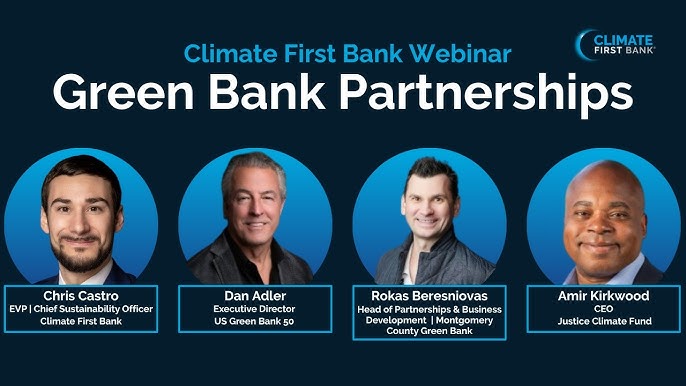
Green banks are emerging as a powerful partnership opportunity for accelerating climate solutions and expanding access to clean energy financing. Watch this video for an engaging conversation on how green banks, mission‑aligned financial institutions, and philanthropy can collaborate to address energy inequality and close critical financing gaps for clean energy and climate resilience projects. This discussion features leaders from:
During this session, we explore what a green bank is, the goals they’re designed to achieve, and how partnerships help expand access to capital for underserved communities. Panelists will share real‑world success stories and funded project examples, such as solar installations, heat pumps, and energy retrofits, while also providing practical guidance on how nonprofits and philanthropic organizations can engage, qualify, and navigate the partnership process.
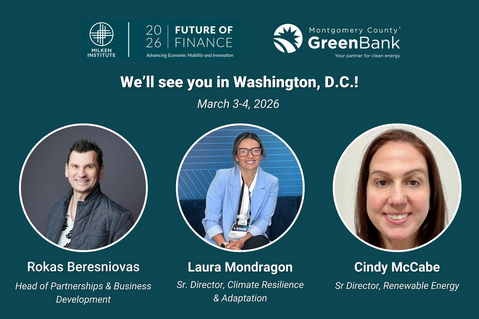
Rokas Beresniovas will be attending the Milken Institute Future of Finance 2026 conference on March 3–4, joining global leaders, investors, policymakers, and innovators to explore the future of finance, infrastructure, climate investment, and economic resilience.
With more than two decades of experience in banking, commercial lending, climate finance, and public-private partnerships, Rokas is particularly interested in discussions around clean energy deployment, resilient infrastructure, community investment, capital formation, and innovative financing solutions that bridge public purpose and private capital.
If you are attending the conference and would like to connect, reach out to discuss climate finance, infrastructure investment, energy transition opportunities, community development, or strategic partnerships.
Looking forward to engaging with fellow leaders shaping the future of finance.
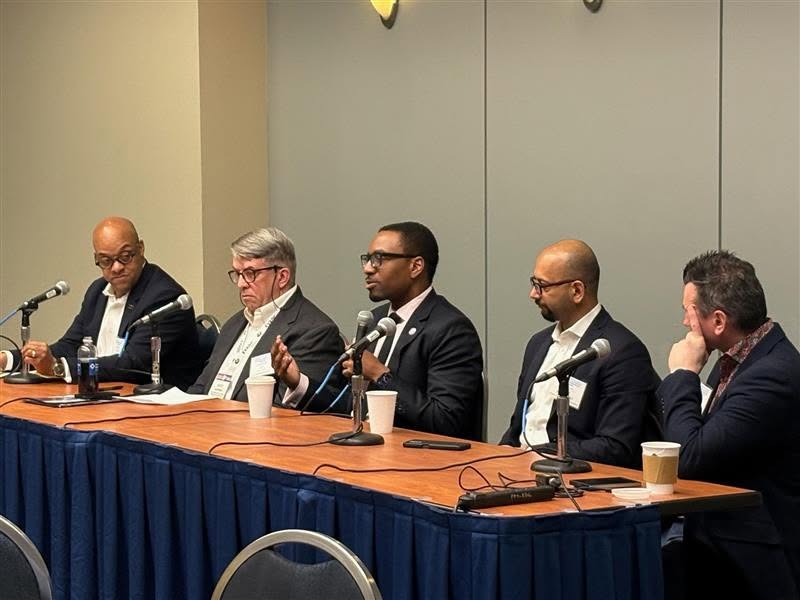
On January 22, 2026, Rokas Beresniovas served as a featured panelist at the Washington Auto Show Early Preview Policy Forum, joining regional leaders to discuss the future of electric vehicle infrastructure and adoption in the Mid-Atlantic. The forum examined EV charging policy, infrastructure investment, grid readiness, and innovative financing approaches to support the transition to clean transportation. Rokas shared insights from his work in climate finance and public-private partnerships, highlighting the role of catalytic capital in accelerating market adoption and expanding access to sustainable transportation solutions.
Calls to “let the free market run its course” often surface whenever proposals arise to regulate electric-vehicle adoption, greenhouse-gas emissions, or fuel efficiency. Yet the energy sector—especially fossil fuels—has never truly operated within a free market.
The U.S. oil and gas sector has benefited from government support for more than a century. The first preferential tax provisions—the intangible-drilling-cost deduction and percentage-depletion allowance—appeared around 1913, shortly after the creation of the modern federal income tax. Initially these measures were intended to encourage exploration in an uncertain frontier industry.
Today, that industry is mature, global, and extraordinarily profitable. In 2011, the three largest U.S. oil companies earned over $80 billion in combined profits while still receiving billions in taxpayer subsidies. President Barack Obama—who simultaneously championed the domestic shale boom and signed the 2015 law ending the crude-oil export ban—acknowledged the contradiction:
“Oil companies are also getting billions a year in taxpayer subsidies – a subsidy they’ve enjoyed year after year for the last century.”
More than a decade later, those supports remain firmly in place.
An analysis by Oil Change International (2025), following World Trade Organization definitions, estimates that U.S. fossil-fuel subsidies now total about $31 billion annually—twice the level recorded in 2017. Key mechanisms include:
Tax deductions that allow firms to credit foreign royalties and taxes against U.S. obligations.
Below-market royalty rates for drilling and mining on public lands.
Expanded “45Q” carbon-capture credits, frequently applied to enhanced oil recovery, enabling access to additional reserves.
Direct appropriations through federal programs.
The 2025 federal tax package adds another estimated $4 billion per year for the next decade. The result is a century-long pattern of intervention that contradicts the rhetoric of laissez-faire capitalism.
A market is not “free” merely because it lacks regulation; it is free when rules apply evenly and no participant receives unearned advantage. The airline industry once operated under similar distortions: decades of route-protection and fuel subsidies insulated incumbents and suppressed competition until deregulation in 1978 unlocked lower prices and innovation. Energy markets display the same structural imbalance today.
In practical terms, a fair energy market would treat every producer—fossil or renewable—under identical fiscal conditions. The current system, by contrast, channels public funds toward mature incumbents while emerging technologies compete without equivalent support.
Redirecting $31 billion each year could deliver tangible household benefits. Analyses show that reallocating those funds to distributed solar could install panels on roughly 54 million homes nationwide within a decade.
For a Maryland household, where average residential electricity rates hover around 15 ¢/kWh and annual consumption averages 10,600 kWh, rooftop solar can reduce bills by $1,400 to $1,600 per year—a 60–70 percent drop in energy costs. Those savings would circulate directly back into local economies instead of being absorbed into corporate balance sheets.
Subsidies distort price signals. When prices fail to reflect environmental costs, investment flows to the wrong places. Economist Joseph Aldy of Harvard notes that properly designed market-based instruments can internalize externalities in decentralized ways—allowing states to calibrate according to regional conditions rather than imposing uniform national charges.
Removing fossil-fuel subsidies and letting decentralized pricing mechanisms account for real costs would align incentives without heavy-handed federal mandates.
Innovation does not always depend on subsidy. The U.S. shale revolution—supported by both Democratic and Republican administrations—drove carbon-dioxide emissions to their lowest levels in a generation, largely by displacing coal. The International Energy Agency credits this as one of the most significant emissions reductions in modern history.
Subsidies like the 45Q carbon-capture credit can indeed stimulate efficiency gains, but perpetual dependence dulls the competitive discipline that drives technological improvement. The objective should be temporary, performance-based incentives, not indefinite fiscal protection.
As defined by classical economists from Adam Smith to Milton Friedman, a laissez-faire capitalist believes that markets function best when voluntary exchange occurs without government favoritism. That principle—not ideology—underpins genuine capitalism.
By this standard, ending fossil-fuel subsidies would not distort the market; it would finally allow it to function as intended: rewarding the most efficient producers, regardless of technology.
The American taxpayer continues to finance an outdated energy model. The same public dollars could strengthen domestic energy independence, modernize the grid, and lower household costs. Every dollar spent propping up mature fossil enterprises is a dollar unavailable for resilience upgrades, innovation grants, or clean-tech manufacturing in communities across the country.
The United States became an economic powerhouse through ingenuity and competition. Those qualities thrive under open, rules-based markets—not under systems where certain industries receive preferential treatment. Ending energy-market distortions is not anti-business; it is pro-efficiency, pro-innovation, and pro-taxpayer.
The debate is not about eliminating markets. It is about removing artificial, government-created distortions that prevent efficient energy systems from competing on cost and performance. When subsidies no longer shield incumbents, capital naturally flows to technologies that deliver more energy per dollar invested—and that is how markets are meant to work.