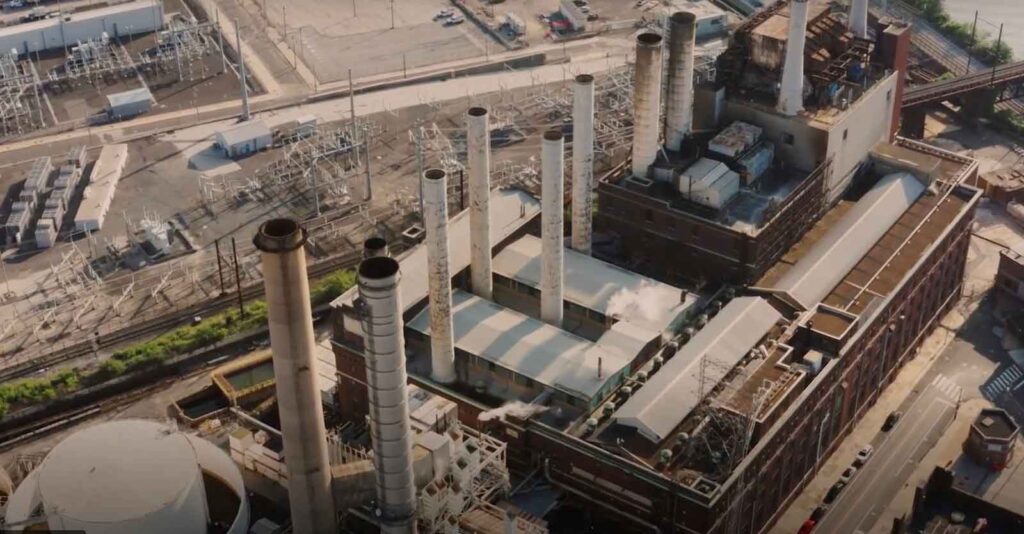
The myth of the ‘free market’ in fossil fuels

Written by Rokas Beresniovas

Calls to “let the free market run its course” often surface whenever proposals arise to regulate electric-vehicle adoption, greenhouse-gas emissions, or fuel efficiency. Yet the energy sector—especially fossil fuels—has never truly operated within a free market.

The U.S. oil and gas sector has benefited from government support for more than a century. The first preferential tax provisions—the intangible-drilling-cost deduction and percentage-depletion allowance—appeared around 1913, shortly after the creation of the modern federal income tax. Initially these measures were intended to encourage exploration in an uncertain frontier industry.

Today, that industry is mature, global, and extraordinarily profitable. In 2011, the three largest U.S. oil companies earned over $80 billion in combined profits while still receiving billions in taxpayer subsidies. President Barack Obama—who simultaneously championed the domestic shale boom and signed the 2015 law ending the crude-oil export ban—acknowledged the contradiction:

“Oil companies are also getting billions a year in taxpayer subsidies – a subsidy they’ve enjoyed year after year for the last century.”

READ: Rokas Beresniovas: Putin, artificial intelligence, and the politics of manufactured sovereignty (October 26, 2025)

More than a decade later, those supports remain firmly in place.

An analysis by Oil Change International (2025), following World Trade Organization definitions, estimates that U.S. fossil-fuel subsidies now total about $31 billion annually—twice the level recorded in 2017. Key mechanisms include:

  • Tax deductions that allow firms to credit foreign royalties and taxes against U.S. obligations.
  • Below-market royalty rates for drilling and mining on public lands.
  • Expanded “45Q” carbon-capture credits, frequently applied to enhanced oil recovery, enabling access to additional reserves.
  • Direct appropriations through federal programs.

The 2025 federal tax package adds another estimated $4 billion per year for the next decade. The result is a century-long pattern of intervention that contradicts the rhetoric of laissez-faire capitalism.

A market is not “free” merely because it lacks regulation; it is free when rules apply evenly and no participant receives unearned advantage. The airline industry once operated under similar distortions: decades of route-protection and fuel subsidies insulated incumbents and suppressed competition until deregulation in 1978 unlocked lower prices and innovation. Energy markets display the same structural imbalance today.

Rokas Beresniovas: Carbon capture is not a climate solution—it’s a fossil fuel lifeline (May 31, 2025)

In practical terms, a fair energy market would treat every producer—fossil or renewable—under identical fiscal conditions. The current system, by contrast, channels public funds toward mature incumbents while emerging technologies compete without equivalent support.

Redirecting $31 billion each year could deliver tangible household benefits. Analyses show that reallocating those funds to distributed solar could install panels on roughly 54 million homes nationwide within a decade.

For a Maryland household, where average residential electricity rates hover around 15 ¢/kWh and annual consumption averages 10,600 kWh, rooftop solar can reduce bills by $1,400 to $1,600 per year—a 60–70 percent drop in energy costs. Those savings would circulate directly back into local economies instead of being absorbed into corporate balance sheets.

Subsidies distort price signals. When prices fail to reflect environmental costs, investment flows to the wrong places. Economist Joseph Aldy of Harvard notes that properly designed market-based instruments can internalize externalities in decentralized ways—allowing states to calibrate according to regional conditions rather than imposing uniform national charges.

Removing fossil-fuel subsidies and letting decentralized pricing mechanisms account for real costs would align incentives without heavy-handed federal mandates.

Innovation does not always depend on subsidy. The U.S. shale revolution—supported by both Democratic and Republican administrations—drove carbon-dioxide emissions to their lowest levels in a generation, largely by displacing coal. The International Energy Agency credits this as one of the most significant emissions reductions in modern history.

Subsidies like the 45Q carbon-capture credit can indeed stimulate efficiency gains, but perpetual dependence dulls the competitive discipline that drives technological improvement. The objective should be temporary, performance-based incentives, not indefinite fiscal protection.

As defined by classical economists from Adam Smith to Milton Friedman, a laissez-faire capitalist believes that markets function best when voluntary exchange occurs without government favoritism. That principle—not ideology—underpins genuine capitalism.

Rokas Beresniovas: Green, clean, or just real? Rethinking our climate vocabulary (May 16, 2025)

By this standard, ending fossil-fuel subsidies would not distort the market; it would finally allow it to function as intended: rewarding the most efficient producers, regardless of technology.

The American taxpayer continues to finance an outdated energy model. The same public dollars could strengthen domestic energy independence, modernize the grid, and lower household costs. Every dollar spent propping up mature fossil enterprises is a dollar unavailable for resilience upgrades, innovation grants, or clean-tech manufacturing in communities across the country.

The United States became an economic powerhouse through ingenuity and competition. Those qualities thrive under open, rules-based markets—not under systems where certain industries receive preferential treatment. Ending energy-market distortions is not anti-business; it is pro-efficiency, pro-innovation, and pro-taxpayer.

The debate is not about eliminating markets. It is about removing artificial, government-created distortions that prevent efficient energy systems from competing on cost and performance. When subsidies no longer shield incumbents, capital naturally flows to technologies that deliver more energy per dollar invested—and that is how markets are meant to work.

The myth of the ‘free market’ in fossil fuels Read More »

Putin, artificial intelligence, and the politics of manufactured sovereignty

Written by Rokas Beresniovas

A few days ago, Vladimir Putin declared that Russia will lose its sovereignty unless it creates artificial intelligence based on Russian culture, history, linguistic wealth, traditions, and traditional values.

On the surface, the statement sounded like a call for technological self-determination. In reality, it was another example of how the Kremlin uses fear, isolation, and the idea of “sovereignty” as political instruments. Whenever Russia faces stagnation, repression, or public discontent, the same refrain emerges: “The West wants to destroy us.”

For decades, the word “sovereignty” has served as a sacred totem of Russian state rhetoric — a justification for every authoritarian reflex. It’s been used so often, and so cynically, that it has lost its meaning. It no longer describes the collective independence of a nation; instead, it signifies the unlimited power of those who rule it.

Each time Russia experiences economic pain or social unrest, the regime deploys the language of existential threat. Citizens are told that the country’s very survival depends on unity, obedience, and the rejection of foreign ideas. To question the government becomes to betray the motherland.

Rokas Beresniovas: Carbon capture is not a climate solution—it’s a fossil fuel lifeline (May 31, 2025)

As former Russian politician Nikolai Travkin recently observed, the more this rhetoric is repeated, the emptier it becomes: “As soon as any discontent begins to emerge among the people due to worsening living conditions, the authorities immediately cry out: ‘The West is encroaching on our sovereignty!’ They’ve used the word so often that the question ‘What benefit does this sovereignty bring me, an ordinary person?’ never arises.”

Travkin’s point exposes the hollowness of the state’s moral claim. True national interest should reflect the interests of citizens, not rulers. It should mean the right to live without upheavals, to have good healthcare and education, to pursue culture, science, and art; to breathe clean air, and to live freely and securely. In that sense, sovereignty is meaningful only when it protects human dignity and the pursuit of happiness. When it becomes a slogan for unchecked authority, it transforms into its opposite — a tool of subjugation rather than liberation.

That’s why Putin’s statement about creating an “AI based on Russian culture and traditional values” is revealing. It’s not about technology at all. It’s about control. Artificial intelligence, by its nature, thrives on openness — on global data, collaboration, and the exchange of ideas. To insist that AI be “rooted in Russian tradition” is to preemptively cage it, to declare that even machines must serve ideology. It’s a signal that innovation will be filtered through politics and that truth — even algorithmic truth — must remain loyal to the state. In this framing, AI is not a frontier of science; it’s a new frontier of propaganda. The goal isn’t to advance discovery but to ensure that the digital mind, like the human one, repeats the official narrative. Putin’s fear is not that Russia will lose its sovereignty. His fear is that it will lose control over how reality itself is defined.

Beyond the politics lies a more pragmatic contradiction — one rooted in energy and infrastructure. Artificial intelligence requires extraordinary computational power, and with it, extraordinary amounts of energy. Training large-scale models demands efficient grids, resilient data centers, and increasingly, clean and renewable energy.

Rokas Beresniovas: Green, clean, or just real? Rethinking our climate vocabulary (May 16, 2025)

In the United States and Europe, the AI revolution has gone hand-in-hand with massive investments in energy efficiency, grid modernization, and renewable generation. The world’s leading AI companies are also among the largest corporate buyers of solar, wind, and geothermal power. They understand that the future of intelligence — human or artificial — will depend on sustainable energy. Russia, by contrast, has done almost nothing to prepare for that reality. Its economy remains deeply dependent on fossil-fuel exports, while domestic energy infrastructure lags decades behind. Investment in renewables and efficiency has been negligible.

The country has neither the physical nor financial ecosystem required to build the kind of high-density, low-carbon data infrastructure AI demands. You can’t build 21st-century intelligence on 20th-century energy. For all its talk of technological independence, Russia’s AI ambitions are built on fragile foundations: inefficient grids, decaying transmission networks, and a near-total absence of private-sector investment in clean energy. Even if Russia were to produce advanced algorithms, the energy cost of training them would make any large-scale development unsustainable. If sovereignty is to mean anything in the technological realm, it must include energy sovereignty — the capacity to power innovation cleanly and reliably. Without that, the rhetoric of “AI rooted in tradition” becomes not only ideological but physically hollow.

What makes this rhetoric powerful is that it taps into real historical trauma. Russia’s collective memory is filled with invasions, revolutions, and humiliations. The concept of sovereignty thus carries deep emotional resonance. It’s easy to mobilize and hard to question. Yet, as Travkin reminds, when sovereignty becomes equated with the absolute rule of one man, it ceases to serve the people. It becomes a permission slip for unaccountable power: “Don’t you dare tell us from the outside what to do with our people — we are a sovereign state.” This mindset isolates not just the country from the world, but also its citizens from their own agency. When sovereignty must be defended at all costs — even at the expense of freedom, progress, and truth — it turns inward, consuming itself. The result is a society locked in a permanent defensive crouch, fearing change as much as it fears the outside world.

Rokas Beresniovas: Green, clean, or just real? Rethinking our climate vocabulary (May 16, 2025)

And that is the true paradox: sovereignty, once stripped of meaning, becomes fear itself — fear of openness, fear of innovation, fear of one’s own people.

When I listened to Putin’s speech, I wasn’t struck by its content — we’ve heard it all before — but by how seamlessly “AI” had been absorbed into the old nationalist lexicon. Technology is supposed to expand horizons; in this narrative, it closes them. The Kremlin’s version of AI isn’t meant to make Russia more competitive or creative. It’s designed to make control more efficient — to ensure that the algorithm never questions authority. “Traditional values” become the new firewall: the invisible code that keeps the machine from learning anything subversive. There’s tragic irony here. The country that once produced some of the world’s greatest scientists, mathematicians, and engineers now treats knowledge as a threat. The state that once dreamed of conquering space now fears the free flow of information.

Travkin ends his reflection with a quiet but devastating question: What good is sovereignty if it brings nothing to ordinary people? That question deserves to echo far beyond Russia. Every society that invokes “national values” to justify censorship, isolation, or intolerance should confront it. Sovereignty without freedom is just another form of dependency — dependency on fear, on propaganda, on the myth of external enemies. Putin’s speech may have been about artificial intelligence, but its subtext was the same as always: Without me, there is no Russia. It’s the oldest line in the autocrat’s playbook.

Read more columns by Rokas Beresniovas

True sovereignty doesn’t come from algorithms trained on “traditional values.” It comes from people empowered to think freely, to speak openly, and to imagine a future not defined by fear.

And perhaps that’s the one kind of intelligence — human or artificial — that authoritarian systems will never be able to replicate.

Putin, artificial intelligence, and the politics of manufactured sovereignty Read More »

Rokas Beresniovas will be speaking at the International Climate Webinar Series — 5th Workshop on the U.S. Clean Mobility Future.

This event will be broadcast live and hosted in Washington, DC. Rokas will share insights on how innovative financing strategies and cross-sector collaborations are shaping the future of clean mobility.
Join us live or online to be part of the conversation. Come connect, explore solutions, and help drive the transition to a cleaner transportation future.

Rokas Beresniovas will be speaking at the International Climate Webinar Series — 5th Workshop on the U.S. Clean Mobility Future. Read More »

Meet Rokas at New York Climate Week

Rokas Beresniovas will be participating and presenting at New York Climate Week, joining panels and high-level sessions hosted by leading organizations—including The New York Times.
He will engage in discussions on the future of climate finance and impact-driven development, highlighting how green capital is accelerating sustainability across sectors.
Connect with Rokas in New York to explore actionable strategies, partnerships, and financing innovations shaping the next generation of climate solutions.

Meet Rokas at New York Climate Week Read More »

Rokas Beresniovas elected to the Montgomery County Building Performance Board

Rokas has been elected to serve on the Montgomery County Building Performance Board, where he will contribute his expertise in sustainable finance, energy strategy, and community-focused development. In this role, he will help guide policy and performance standards that support higher energy efficiency and climate resilience across the built environment in Montgomery County.

Read More → https://montgomerycountymd.granicus.com/MetaViewer.php?view_id=169&clip_id=18085&meta_id=198156

Rokas Beresniovas elected to the Montgomery County Building Performance Board Read More »

Carbon capture is not a climate solution—it’s a fossil fuel lifeline

Written by Rokas Beresniovas

Carbon capture and storage (CCS) is receiving renewed attention. With billions of dollars in subsidies flowing from the Inflation Reduction Act and high-profile backing from major fossil fuel companies, CCS is being touted as a critical solution to the climate crisis.

The central idea is simple: continue burning fossil fuels but capture the carbon dioxide before it escapes into the atmosphere, then store it safely underground. On paper, it sounds like a technological fix that allows us to maintain our energy habits while reducing emissions.

But the reality is far more complicated—and far less promising. Today, CCS is not solving the climate crisis. In most cases, it’s exacerbating it. The majority of carbon capture projects in the United States are not focused on reducing emissions. Instead, they are designed for enhanced oil recovery—a process where captured CO₂ is injected into aging oil fields to extract more oil. Rather than being a genuine mitigation strategy, this use of CCS increases the total amount of carbon in the atmosphere. It’s a circular process that captures carbon in order to release even more, and it’s being funded, in part, with public dollars.

Beresniovas: Green, clean, or just real? Rethinking our climate vocabulary (May 16, 2025)

Some of the largest oil and gas companies in the world—ExxonMobil, Chevron, Occidental Petroleum—are leading the charge on CCS, promoting it as evidence of their climate commitment. At the same time, they continue expanding fossil fuel operations.

These companies receive generous tax credits, up to $85 per ton for carbon permanently stored and $60 per ton for carbon used in oil recovery. Without strong accountability measures, these incentives function as subsidies for fossil fuel expansion, not decarbonization. That’s the heart of the criticism many scientists, policy experts, and environmental groups level against CCS: it’s not just ineffective in practice, it’s being used to delay the transition we need.

Even the more advanced forms of carbon capture, like direct air capture and mineralization, are still in the early stages and come at a steep cost. The Orca facility in Iceland, often cited as a model, captures just a few thousand tons of CO₂ annually—a drop in the bucket compared to global emissions. The price tag for this process is currently over $1,000 per ton, which makes it financially unviable as a scalable solution in the near term. These technologies may have a role to play in the long-term future for sectors that are hard to decarbonize, but they are not a substitute for immediate, large-scale emissions reductions.

There’s also a serious concern around the permanence of carbon storage. While industry proponents suggest that CO₂ can be safely stored underground, the science is not so certain. Pressurized carbon dioxide behaves as a supercritical fluid—it’s buoyant and mobile. It can migrate through rock fractures and porous formations.

The failure of the Yucca Mountain nuclear waste site in the U.S. shows how difficult it is to guarantee the permanent containment of hazardous material underground. What happens if, after decades, the carbon leaks back into the atmosphere? What happens if we’ve already spent billions and lost precious time?

Critics of CCS are not opposed to innovation—they are opposed to delay. There’s a long history of fossil fuel companies using unproven technologies to create the illusion of progress. In this case, CCS is being used not to reduce dependence on fossil fuels, but to justify continued investment in them. That’s why many experts consider it greenwashing. Some go further, calling it a form of fraud—not necessarily in the legal sense, but in the moral one. It’s a false promise that distracts from real, scalable climate solutions.

Those real solutions are already here. Renewable electricity generation—particularly from solar and wind—is now the most affordable form of new energy in many parts of the world. Battery storage is advancing rapidly. Electrifying transportation and heating systems, improving energy efficiency in buildings, modernizing our electric grid—these are proven strategies that cut emissions, reduce costs, and improve public health. They don’t need speculative fixes or complex infrastructure to scale. What they need is consistent investment, smart policy, and political will.

We are in a decisive decade. The IPCC has warned that we must cut global emissions nearly in half by 2030 to avoid the most dangerous consequences of climate change. That doesn’t leave room for distractions. It doesn’t leave time for experiments that may never scale. Every dollar and every year we spend propping up ineffective solutions is a missed opportunity to invest in the transition we already know how to build.

Carbon capture may have a role in the future, particularly for hard-to-abate sectors. But it is not a climate solution today—not in the way it’s being implemented, not at the scale it’s being promised, and not with the incentives currently attached to it. If we’re serious about solving the climate crisis, we need to stop subsidizing delay and start funding transformation. Carbon shouldn’t be captured after it’s burned—it should be left in the ground.

Carbon capture is not a climate solution—it’s a fossil fuel lifeline Read More »

Green, clean, or just real? Rethinking our climate vocabulary

Written By Rokas  Beresniovas and Sacha Alaby

During a recent Climate Week event, a recurring pattern stood out: presenters, panelists, and participants frequently referred to renewable energy projects as “clean energy,” “green energy,” or “eco-friendly energy.” These terms rolled off the tongue with ease—almost instinctively.

In an information-rich world, however, the words chosen matter more than ever. While referring to renewable energy projects as “clean energy” may seem benign to industry insiders, the use of the term may be construed as disingenuous by those who expect precision in language. Much like translating a concept from one language to another, shortcuts for ease of reference can result in meaningful loss. As this article outlines, a shortcut like “clean energy” can become a point of significant contention.

To clarify, this piece does not seek to slander renewable energy. Quite the opposite—it recommends a strategy that stakeholders can adopt to support its continued growth. More particularly, it calls for careful reflection on the language used to describe renewable energy—not only for the sake of accuracy, but to protect the credibility of the work being done to enhance energy infrastructure and to build trust with a broader audience.

READ: Align your finances with sustainability: How to choose bank accounts that support the planet? (January 27, 2025)

Let’s start with a simple but often overlooked fact: there’s no such thing as perfectly clean energy. As MIT’s Dr. Jennifer Morris notes, all energy sources—whether fossil-based or renewable—have environmental footprints. Whether it’s the mining of critical minerals, the use of water and chemicals in manufacturing, or the end-of-life challenges of solar panels and wind turbines, renewable energy is not free of externalities.

It’s tempting to call renewable energy “clean” because it feels good. It signals values. It aligns with climate goals. However, the term also creates blind spots—especially when used without context.

In an age where information is accessible in seconds, using terms like “clean energy” without nuance risks being perceived as misleading. Worse, it can open the door to accusations of greenwashing—intentionally or not. For capital providers, developers, and climate advocates, this is not just a semantic issue. It’s a strategic one.

READ: The hidden crisis of property underinsurance: A looming threat to housing stability (January 8, 2025)

Telling any story of progress requires being unabatedly transparent. Acknowledging the complexity of renewable energy projects over their entire lifecycles (including Scope 3 and Scope 4 related emissions) and recognizing trade-offs between different energy sources—both renewable and non-renewable—is not a reason to abandon optimism. In fact, being transparent about the imperfections of renewable energy in telling the story of progress can make its case stronger, not weaker. Doing so exemplifies seriousness, maturity, and integrity. Overlooking or downplaying any lifecycle pollution or negative impact involved in the realization of renewable energy projects can signal the opposite.

To quote Abraham Lincoln, “Nothing is more damaging to you than to do something that you believe is wrong.” While calling renewable energy “clean” may not feel wrong among renewable energy financiers, it’s worth asking whether it holds up in a broader context—especially when the credibility and momentum of the energy transition are on the line.

So next time, before deploying familiar terms like “clean energy,” it might be advisable to pause and consider whether such word selection oversimplifies a complex reality in the minds of the audience. A responsibility of transparency is owed to the people served—and to the future being built—to get the language right.

Green, clean, or just real? Rethinking our climate vocabulary Read More »

Financing the future: How green banks are powering the clean energy transition

May 4, 2025

Chris Cucci, Executive Vice President and Chief Strategy Officer of Climate First Bank, speaks at Startup Bazaar: DC Climate Week at the Hopkins Bloomberg Center in Washington, DC, on April 29. Also pictured are Rokas Beresniovas (center), Senior Director of Commercial Business & Climate Finance at Montgomery County Green Bank, and Bhagyashree More, ESG Reporting and Compliance member at FedEx.

Green banks are bridging capital gaps to fund clean energy, electrify communities, and build local climate resilience.

By AB Wire

At a time when climate action demands both innovation and scalable financing models, green banks are emerging as vital players in the clean energy transition. At “Startup Bazaar: DC Climate Week,” hosted by The American Bazaar at the Hopkins Bloomberg Center in Washington, DC, on April 29, a compelling panel explored how these institutions bridge the gap between public purpose and private capital to drive sustainable infrastructure and clean energy innovation. Read more.

Financing the future: How green banks are powering the clean energy transition Read More »

Maryland’s Green Banking Pioneer: Accelerating Climate Action

Discover how the first county-wide Green Bank in the US, Montgomery County Green Bank, is driving decarbonization. Learn about their innovative public-private partnership model, leveraging public funds to attract private investment in renewable energy, energy efficiency, and more, all within their county. See how they’re helping achieve ambitious climate goals and fostering a greener future through strategic financial mechanisms and technical assistance.

The main things they talked about were:

The growth and future of the Green Bank space nationwide, including the GB 50 coalition and increasing interest from CDFIs and conventional banks in climate finance.

The founding and mission of the Montgomery County Green Bank as the first county-wide Green Bank in the nation, established to help the county decarbonize.

Successful projects and initiatives, such as a large affordable multifamily solar installation, and the lessons learned from them.

The future priorities and actions of the Montgomery County Green Bank and the broader Green Bank Network, including adapting to evolving building energy performance standards.

Innovative partnerships, such as the one with Climate First Bank to provide residential solar loans.

Read more.

Maryland’s Green Banking Pioneer: Accelerating Climate Action Read More »

Rokas to speak at the 11th Annual UNC Cleantech Summit


Rokas Beresniovas will be speaking at the 11th Annual UNC Cleantech Summit on March 24-25, 2025, at the Friday Conference Center in Chapel Hill, NC. As a panelist on the Green Banks session, he will join industry leaders to discuss the critical role of green banks in driving clean energy investment, accelerating sustainability efforts, and fostering economic growth. With nearly 1,500 attendees, this Summit is the largest university-led cleantech event in the U.S., bringing together professionals from business, government, and academia for meaningful discussions and networking. Rokas looks forward to sharing insights on the future of climate finance and engaging with fellow experts in the field. Learn more and register here.

Rokas to speak at the 11th Annual UNC Cleantech Summit Read More »